
HORSE RIDING
HORSE RIDING
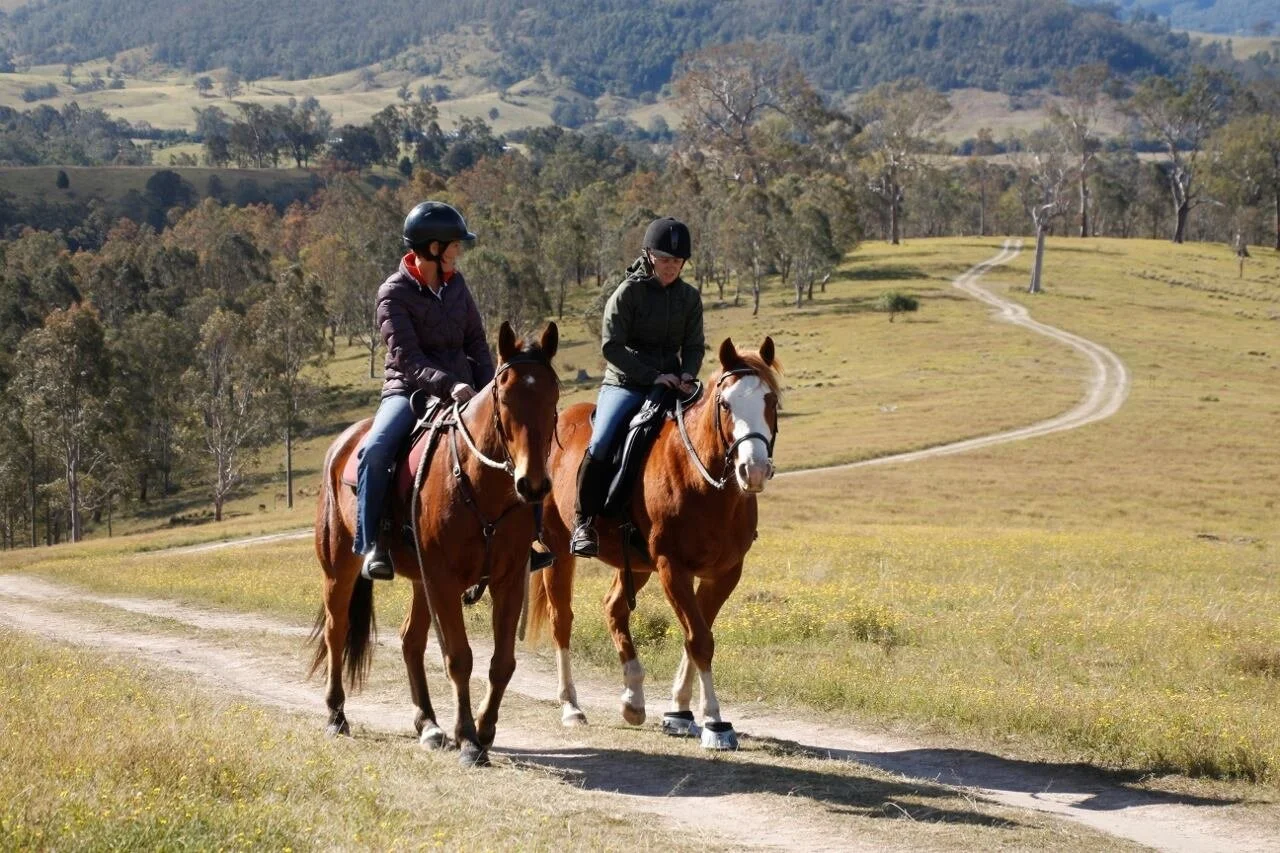
Horse riding is permitted in all areas of the Dungog Common (except on the Mountain Bike Flow Tracks).
It is a magical place for a ride, however, we ask you to please avoid causing damage to the trails, waterways, vegetation or stress to the livestock and native animals.
All pedestrian and bicycle bridges are not suitable for horses. Horse riders are asked to consider staying off the Common when the ground is very wet, to help prevent damage to the trails.
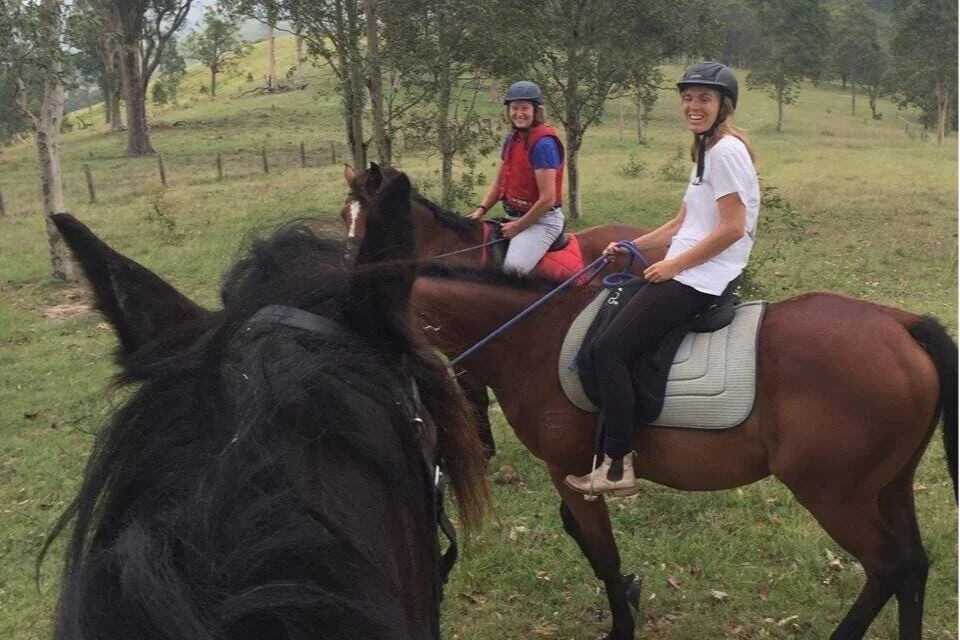
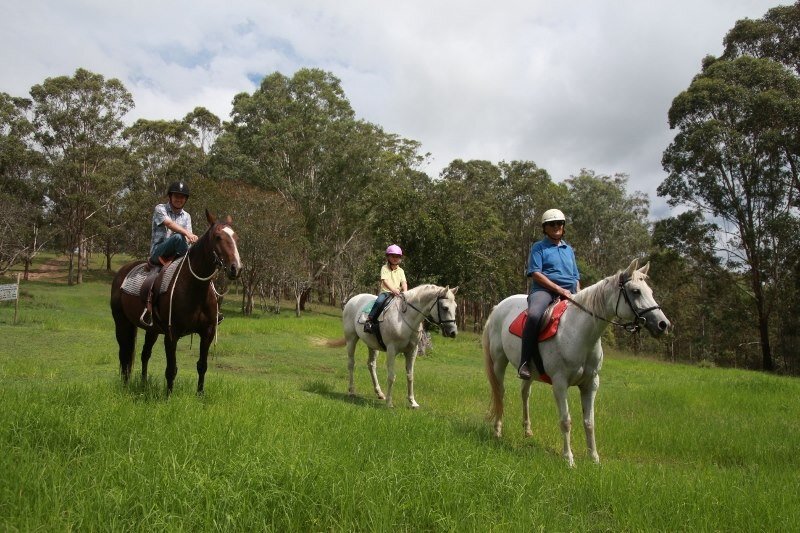
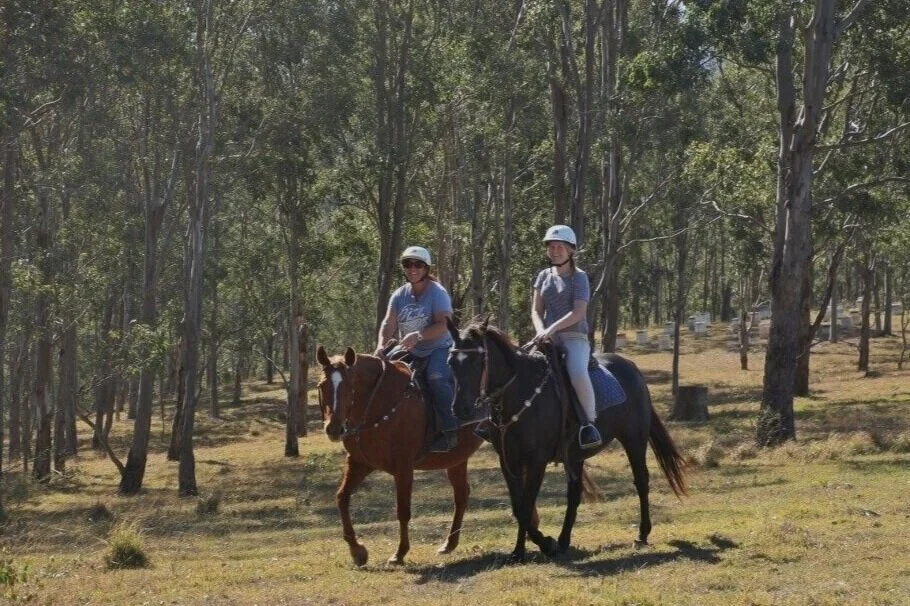
Riders are responsible for their own safety and the safety of their horses, the Dungog Common Recreation Reserve Land manager recommends all riders wear approved safety helmets when riding in the Dungog Common.
If riding alone please inform a friend or family member where you are riding and consider weather and trail conditions before riding.
Parents/guardians are responsible for children riding in the Dungog Common.
Horses must be kept under control at all time and must be secured in a yard, tied up or held when not being ridden — loose horses will be impounded.
Horses are not allowed to stay overnight at the Dungog Common unless authorised by the Dungog Common Recreational Reserve Land Manager.
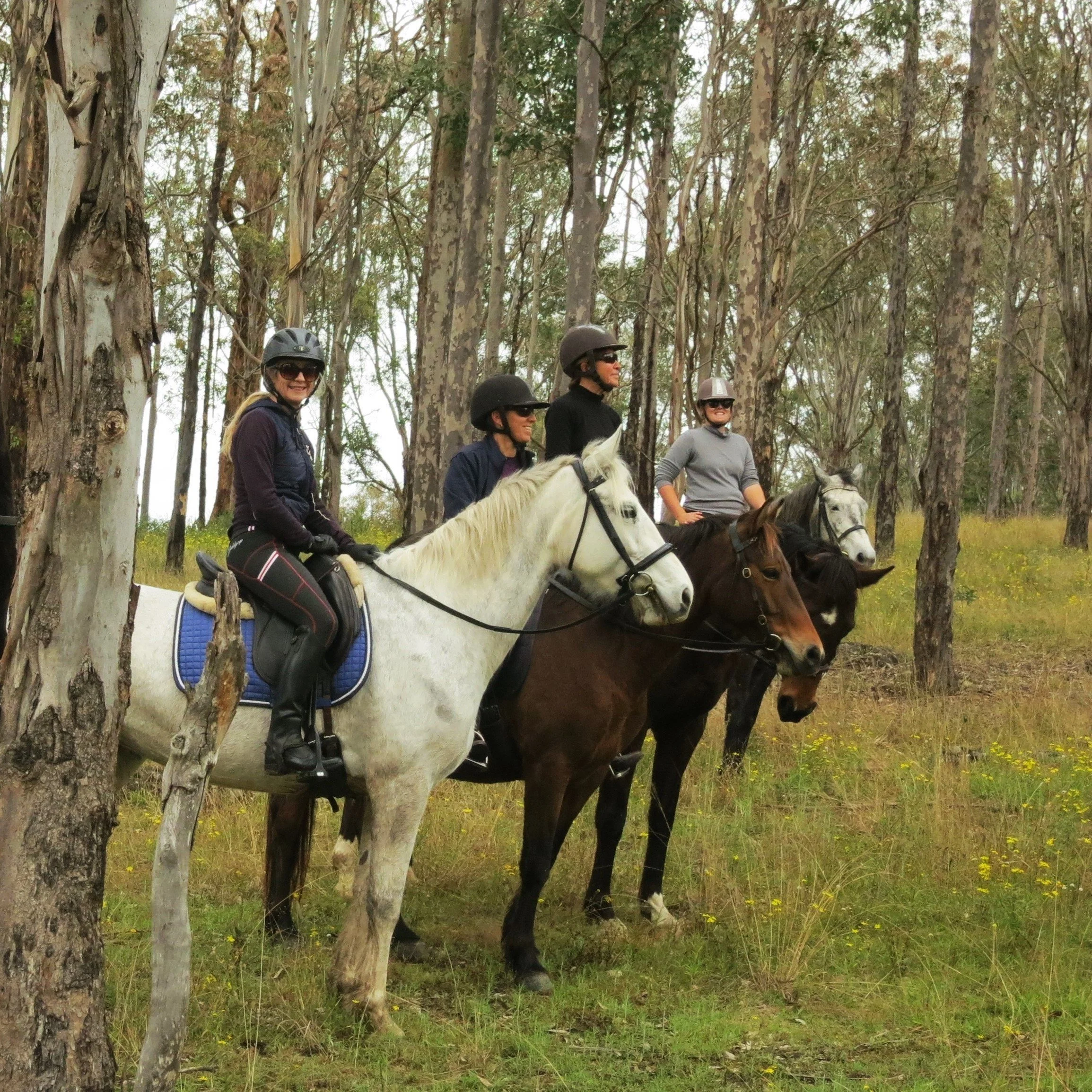
CONDITIONS OF USE - HORSE RIDING
The following conditions of use apply to the Equestrian trails at all times:
Observe and follow all signage on the trails.
Always wear an Australian Standard Certified helmet.
Equestrians are not permitted to ride on the Flow Tracks (purpose-built mountain bike trails) as it damages the track surface. Other fire trails are open to both equestrians and cyclists.
Share the trail with other permitted users. Equestrians have the right of way over all other users, this is an international standard, walkers have next priority and then cyclists.
Remember that your behaviour is a reflection of the horse community as a whole.
Travel in single file on busy trails and pass other trail users on the right with care.
Politely encourage cyclists and runners to slow down or stop before passing or overtaking and thank them for doing so.
Yield to faster horse riders.
Ride your horse at a controlled speed and watch for cyclists, especially approaching blind corners or intersections where you are likely to meet MTB trails.
Tie a red ribbon to the tail of any horse that may kick.
Other trail users may not be familiar with horses and their reactions. Talk to them wherever possible.
Plan your ride; know the distance and approximate ride time of the trail you intend to ride.
Carry appropriate food and water.
When parking your float leave room for others to park and unload safely.
Do not clean out your horse float in the car park.
Trail use may be restricted for safety reasons at various times or for special events or adverse weather condition.
Organisers of a planned event may change user procedures at their discretion and must advise all users of these changes prior to their participation.
Carry a mobile phone, especially if you are riding on your own. Know who to call in an emergency, either 000 or a friend.
Load the Emergency Plus app on your phone so you can give GPS coordinates to the emergency services if you need them